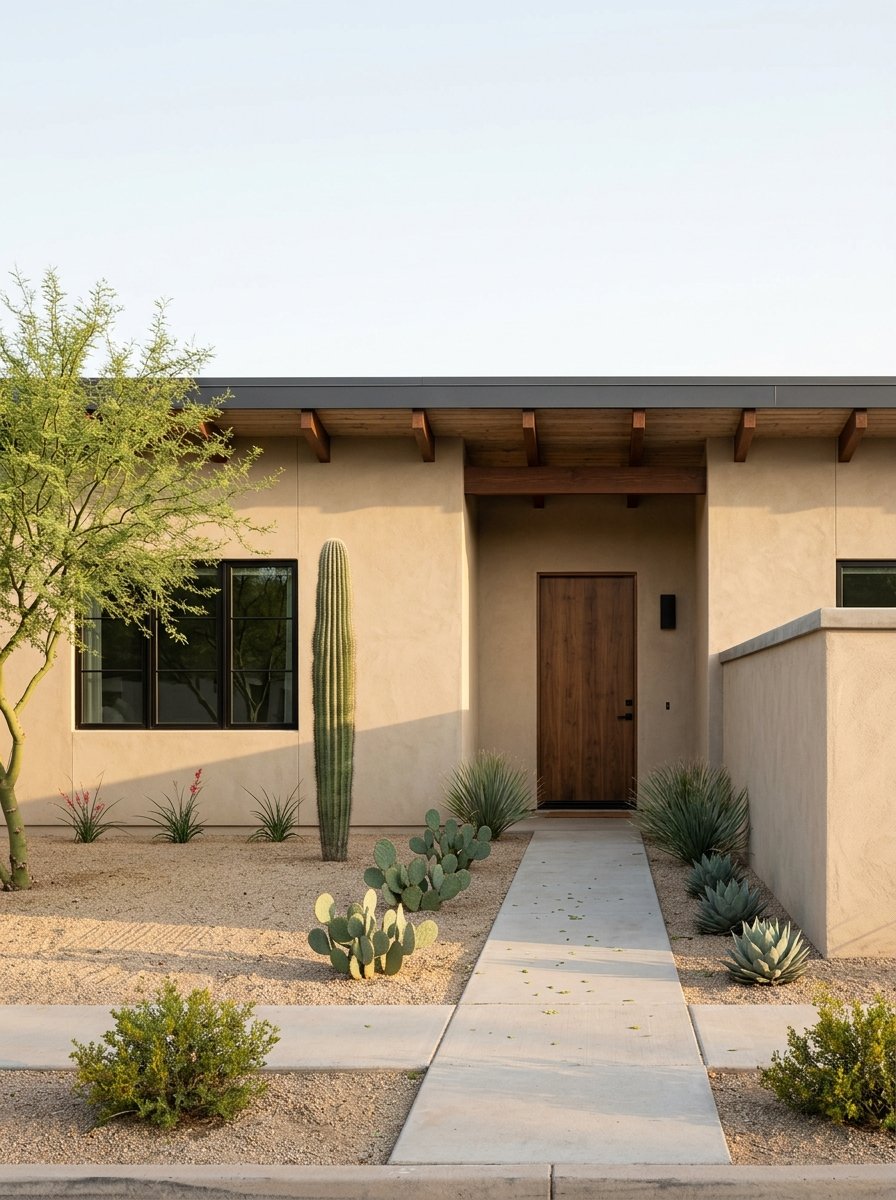
If you love homes with character, Central Tucson can feel like a treasure hunt. Within a relatively compact part of the city, you can find adobe rowhouses, Craftsman bungalows, Spanish Revival details, burnt-adobe ranch homes, and mid-century neighborhoods shaped by landscape as much as architecture. If you are trying to figure out where your design preferences fit best, this guide will help you read the area with a more informed eye. Let’s dive in.
Why Central Tucson Appeals to Design Lovers
Central Tucson is not just one look or one housing type. It is better understood as the downtown and University of Arizona corridor, plus the adjacent historic neighborhoods that surround it.
What makes the area so compelling is the way several eras of Tucson design overlap. City preservation materials show a built environment shaped first by adobe traditions and desert-adapted design, then by bungalow-era growth, and later by postwar ranch and mid-century planning.
For buyers, that means you are not choosing only by price or square footage. You are also choosing between different architectural languages, street patterns, and daily rhythms.
Three Design Worlds in Central Tucson
A helpful way to picture Central Tucson is as three overlapping residential fabrics. Each one offers a different experience of space, style, and neighborhood character.
Barrio blocks near downtown
In neighborhoods such as Barrio Anita, Barrio El Hoyo, Barrio El Membrillo, Barrio Libre, and Barrio Santa Rosa, the historic fabric includes adobe or Sonoran rowhouses, flat roofs, and homes that may sit close to or flush with the street. These older blocks can feel more urban and intimate than later subdivisions.
Armory Park adds another layer to this story. It was the first residential district in Tucson listed on the National Register, and it combines wide avenues with early revival styles and rail-era patterns.
If you are drawn to thick walls, simple massing, direct street presence, and a strong sense of historic Tucson, these neighborhoods may feel especially compelling. Their appeal often comes from authenticity and proportion rather than size.
Bungalow neighborhoods near the university
Around the university, the housing stock shifts toward late 19th- and early 20th-century neighborhoods. West University was built out between 1890 and 1930 and includes more than 700 buildings, with about half identified as Craftsman Bungalows.
Sam Hughes, Rincon Heights, Jefferson Park, Pie Allen, and Blenman-Elm add even more variety. Here, you may see Craftsman, Spanish Colonial Revival, Pueblo Revival, Spanish Eclectic, Mission Revival, International, and other early- to mid-20th-century styles.
These areas often appeal to buyers who want architectural detail with a slightly softer residential feel. Front porches, varied rooflines, mature streets, and easy access to the university corridor all shape the experience.
Postwar enclaves with landscape and space
Central Tucson also includes postwar neighborhoods where planning and landscape play a major design role. In places such as San Rafael Estates, Broadmoor, Catalina Vista, Colonia Solana, Winterhaven, El Encanto Estates, and parts of Blenman-Elm and San Clemente, you see ranch and mid-century patterns that are distinctly Tucson.
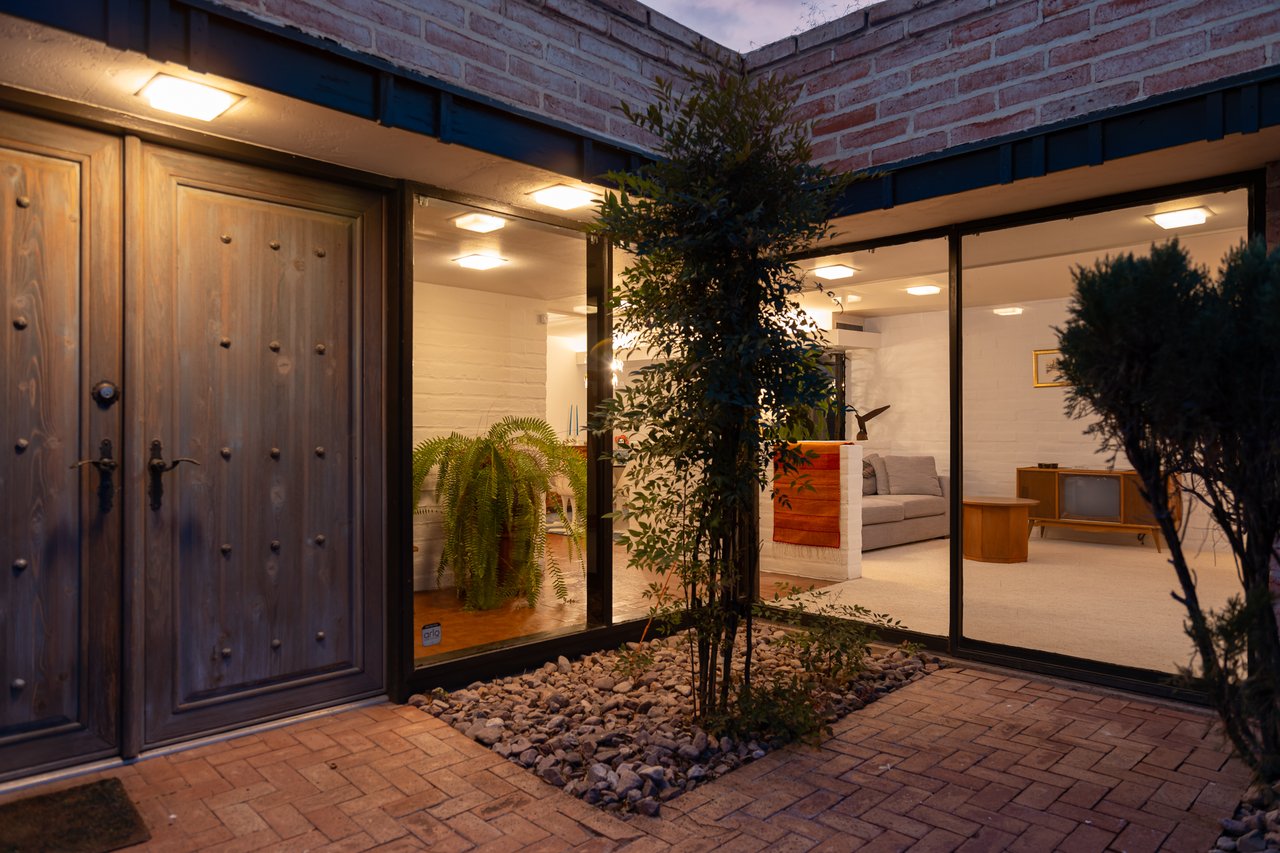
The city’s postwar residential report highlights local signatures such as Ranch, Transitional Ranch, Modern Ranch, Territorial Ranch, burnt adobe, low-slope gable roofs, slump block, and low-water landscape design. These details are part of what makes Central Tucson’s mid-century homes feel regionally grounded rather than generic.
If you want more lot space, stronger indoor-outdoor potential, or a neighborhood layout that feels greener and more open, these enclaves often provide that balance.
How Street Patterns Shape the Feel
Design is not only about the house itself. In Central Tucson, the shape of the street and the spacing of homes can change how a neighborhood feels day to day.
Urban edges and close setbacks
In the older barrio areas, homes may sit very close to the street, creating a stronger street wall and a more pedestrian sense of enclosure. That can make a block feel lively, direct, and visually connected.
Armory Park and other early core neighborhoods also reflect older development patterns. For some buyers, that historic density is exactly the point.
Walkable university-adjacent grids
Rincon Heights is described as walkable and includes High School Wash with WPA-era curbs, sidewalks, and culverts. Sam Hughes includes a major bike route boulevard, while Jefferson Park is described as walking- and bike-friendly.
Blenman-Elm stands out partly because of wide landscaped streets, a bike route, and proximity to the university and Banner Health. If your ideal neighborhood includes a sense of movement, trees, and connected streets, these areas deserve a close look.
Curving streets and park-like planning
Several mid-century neighborhoods break away from Tucson’s older grid. El Encanto Estates was deliberately planned as a departure from gridiron development, while Colonia Solana uses triangular parks and intersecting curvilinear streets on large desert-landscaped lots.
Broadmoor introduced curvilinear streets, medians, and a paved pedestrian path. Catalina Vista uses landscaped medians and roundabouts, while San Rafael Estates and Winterhaven are known for curving streetscapes and a park-like feel.
For design-minded buyers, this matters because neighborhood planning affects privacy, views, pacing, and the way landscape frames architecture.
What to Look for on a Home Tour
If you care about design, your showing checklist should go beyond finishes. In Central Tucson, the most important questions often relate to what is original, what has changed, and whether updates respect the home’s character.
Materials and architectural integrity
Pay attention to original materials where they remain. In this part of Tucson, details such as adobe walls, burnt adobe, slump block, wood windows, and period-appropriate trim can carry real design value.
Also look closely at roof shape, window proportions, and site orientation. These are not minor details. They are part of what makes a Sonoran rowhouse, bungalow cottage, or ranch home feel true to its era.
Additions and massing
Later additions are common in older neighborhoods, but not all additions are equally successful. A useful question is whether the newer work respects the original scale and massing of the house.
When an addition overwhelms the original structure, the home can lose some of the design clarity that made it special. When it is handled well, added space can feel natural and coherent.
Landscape as part of design
In Central Tucson, landscape is often part of the architecture. Postwar neighborhoods especially reflect low-water landscape design and subdivision planning that uses medians, parks, and planted setbacks to shape the overall experience.
On a tour, notice how the house meets the lot. A strong design fit often comes from the relationship between structure, shade, outdoor space, and desert planting rather than from interior updates alone.
Historic Review Matters in Some Areas
If you are buying or preparing to sell in Central Tucson, it is important to understand where design review may apply. The City of Tucson states that exterior changes within a Historic Preservation Zone require design review.
The city identifies five Historic Preservation Zones: Armory Park, Barrio Historico, El Presidio, Fort Lowell, and West University. It also identifies three Neighborhood Preservation Zones: Feldman’s, Jefferson Park, and Rincon Heights/Pie Allen, where new residential infill must be compatible with surrounding historic character.
That does not mean these neighborhoods are hard to navigate. It does mean that design decisions carry extra importance, especially for exterior changes, additions, and infill.
Matching Your Style to the Right Pocket
One of the best ways to approach Central Tucson is by fit. Instead of asking which neighborhood is best, ask which type of fabric supports the life and design experience you want.
Choose the barrio core if you want
- Historic adobe traditions
- More urban block patterns
- Homes with direct street presence
- Strong ties to early Tucson building forms
Choose university-adjacent neighborhoods if you want
- Craftsman and revival-era variety
- Walkable or bike-friendly streets
- Early suburban character
- Proximity to the downtown and university corridor
Choose postwar enclaves if you want
- Mid-century and ranch design
- Larger lots and more landscape
- Curving streets and planned subdivision features
- Strong indoor-outdoor potential
This framework is especially useful if you are relocating or narrowing a search. Central Tucson offers range, but the right match often becomes clear when you focus on how architecture and neighborhood planning work together.
Why Design-Led Guidance Helps
In a place as layered as Central Tucson, a home’s value is not always obvious from a listing sheet. Architecture, preservation context, renovation potential, and neighborhood fabric can all shape what a property offers and how it should be evaluated.
That is where a design-literate approach can make a real difference. Whether you are buying a bungalow near the university, considering a ranch home in a curving postwar enclave, or preparing a distinctive home for sale, careful attention to materials, light, layout, and setting helps you make more confident decisions.
If you are exploring Central Tucson and want a thoughtful read on architecture, neighborhood fit, or seller preparation, Hazelbaker & Ranek can help you look beyond the obvious and focus on what gives a home lasting appeal.
FAQs
What architectural styles are common in Central Tucson homes?
- Central Tucson includes Sonoran and barrio-era adobe homes, Craftsman bungalows, Spanish Colonial Revival, Pueblo Revival, Mission Revival, International styles, and postwar ranch and mid-century homes.
What makes Central Tucson appealing for design-conscious buyers?
- Central Tucson offers a rare mix of historic adobe traditions, bungalow-era neighborhoods, and postwar ranch and mid-century enclaves, all shaped by desert-adapted design and strong neighborhood character.
What Central Tucson neighborhoods have bungalow-era homes?
- West University, Sam Hughes, Rincon Heights, Jefferson Park, Pie Allen, and Blenman-Elm are among the central neighborhoods known for bungalow and early 20th-century revival-era homes.
What should buyers look for when touring historic Central Tucson homes?
- Focus on original materials, roof shape, window proportions, site orientation, and whether additions respect the home’s original massing and architectural character.
What Central Tucson neighborhoods may require historic design review?
- The City of Tucson says exterior changes within Historic Preservation Zones require design review, and named HPZs include Armory Park, Barrio Historico, El Presidio, Fort Lowell, and West University.
What is daily life like near downtown and the University of Arizona in Central Tucson?
- The downtown and university corridor tends to be more transit-oriented and urban in feel, with the Sun Link Streetcar connecting Mercado San Agustín, Downtown, Fourth Avenue, Main Gate Square, and the University of Arizona along a 3.9-mile route with 23 stops.