If you are considering a move to Oro Valley, the setting is often what grabs you first. Mountain ranges frame daily life, desert light changes by the hour, and many neighborhoods are shaped to make the most of both. If you want to understand how the homes, views, and routines fit together, this guide will help you picture what living here really feels like. Let’s dive in.
Oro Valley at a Glance
Oro Valley sits in northern Pima County, about three miles north of Tucson, between the Catalina and Tortolita mountain ranges. At roughly 2,620 feet in elevation, it offers a high-desert setting with broad views and a strong connection to the Sonoran Desert landscape.
The town had an estimated 2024 population of 48,855. It also has a 76.4% owner-occupied housing rate, and 34.9% of residents are age 65 and older. In everyday terms, that adds up to a place that feels established, residential, and less transient than many fast-growing suburbs.
What Homes Look Like in Oro Valley
Oro Valley is mostly a single-family home market. The town’s housing summary reports that 72.7% of housing units are single-family detached, while 15.4% are multifamily and less than 1% are manufactured homes.
That said, the housing mix is not one-note. Town materials describe planned communities and subdivisions, apartment options, large-lot homes, horse-property pockets, age-restricted communities, and senior living. If you are searching here, you will likely see a dominant suburban pattern, but with several distinct lifestyle choices inside it.
Most Homes Date From 1980 to 2010
A large share of Oro Valley’s housing stock was built between 1980 and 2010. That means many homes reflect newer suburban planning patterns, with organized neighborhoods, garages, outdoor living areas, and layouts designed for modern everyday use.
For buyers, this can translate to a market where homes often feel more contemporary in scale and flow than older parts of greater Tucson. For sellers, it means design details, updates, and presentation can play an important role in helping one home stand out from another nearby.
Desert Design Shapes the Look
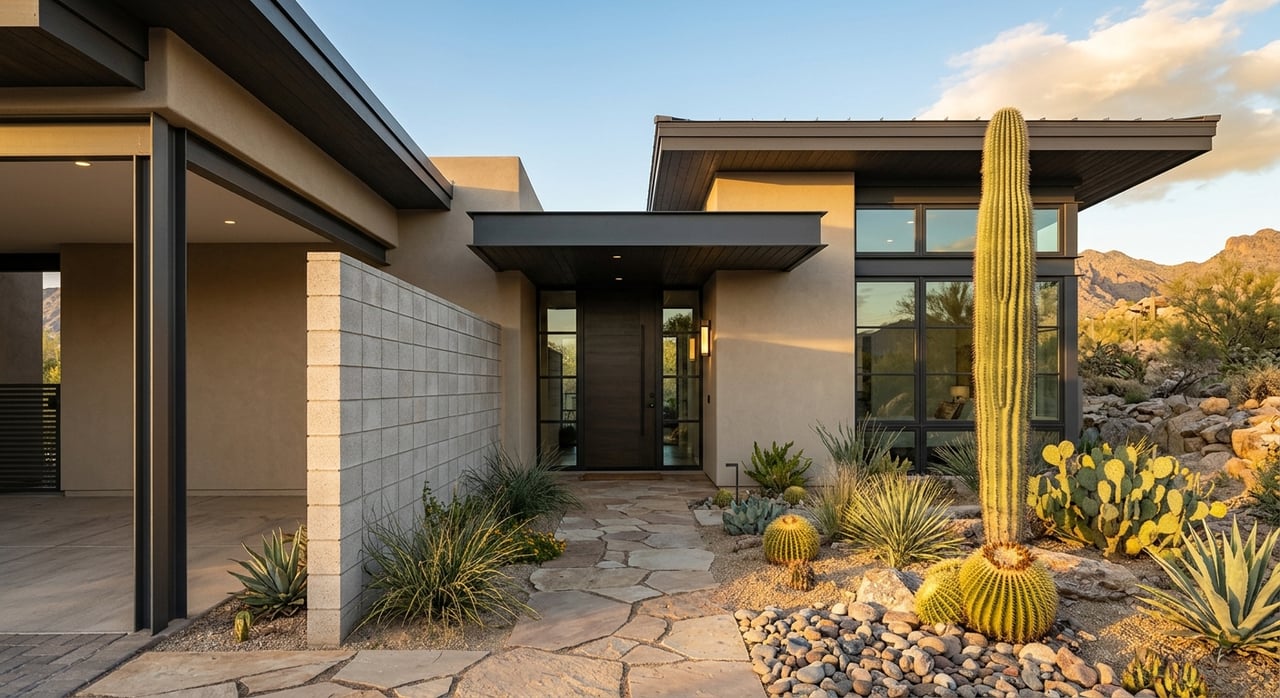
One of the most distinctive parts of Oro Valley is that newer construction often responds to the desert instead of ignoring it. Town-approved model plans in the Shannon 80 area include single-story homes with Spanish, Craftsman, and Tuscan elevations, along with covered patios, courtyards, stucco, stone, varied rooflines, and low-reflectivity colors.
The stated goal is to stay sensitive to the natural desert environment. In practical terms, that gives many neighborhoods a more grounded, place-specific look than a generic subdivision style would.
Landscaping Follows the Climate
Architecture here is often paired with low-water landscape choices. Rancho Vistoso design guidelines emphasize compatibility with the Sonoran Desert, preserved washes and saguaros, and xeriscape principles.
That matters because the overall visual character of a neighborhood is shaped by more than the house itself. Streetscapes with native vegetation, desert setbacks, and preserved natural features can make the community feel more connected to its setting.
Older Homes Add Another Layer
Although much of Oro Valley feels newer, the area also has an older architectural story. The town’s historic preservation materials note that residential development did not truly begin until after World War II, with significant construction in the late 1950s.
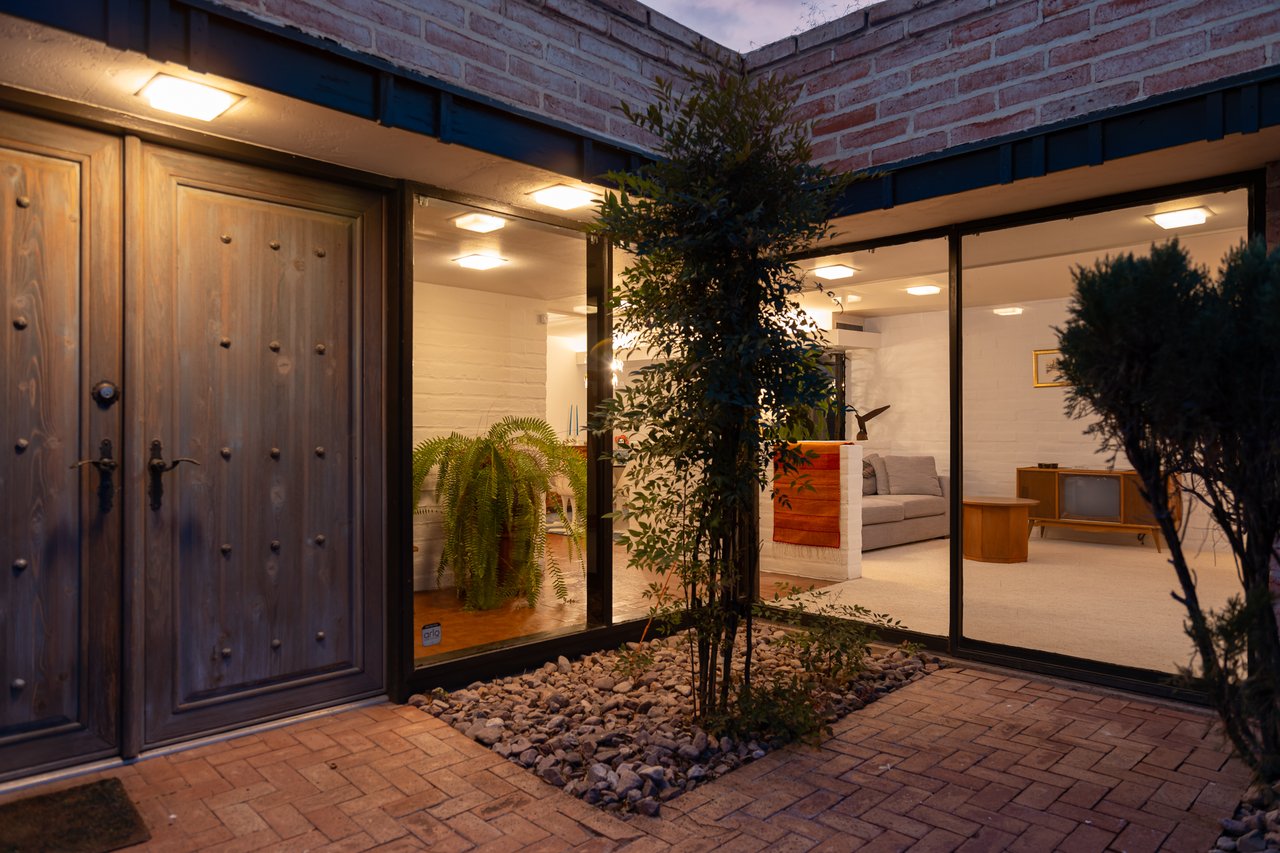
That history shows up in some ranch and mid-century homes. A town variance exhibit describes a 1959 home as a mid-century ranch with elongated plans, carports, ribbon windows, and integrated patio walls, which gives a sense of the character you may still find in select pockets.
Why That Matters for Buyers and Sellers
If you love architecture, Oro Valley can be more interesting than its suburban reputation suggests. Alongside planned communities and newer homes, there are properties with ranch and mid-century features that offer a different kind of appeal.
For buyers, that can open up more choices in style and layout. For sellers, it is a reminder that design character often deserves thoughtful marketing, especially when a home has details that set it apart from more standard nearby inventory.
Golf Is Part of the Picture
Golf-course living is a visible part of Oro Valley’s identity, but it is not the whole story. Town materials highlight El Conquistador Golf, Pusch Ridge Golf Course, and The Views Golf Club, while communities like Sun City Oro Valley and Stone Canyon are closely tied to golf access and views.
If you are drawn to fairway vistas or amenity-focused living, you will see those options here. But if golf is not part of your lifestyle, Oro Valley still offers plenty of neighborhoods centered more on trails, parks, mountain views, and everyday convenience.
Daily Life Leans Outdoors
Oro Valley’s daily rhythm is closely tied to outdoor access. The town maintains roughly 30 miles of trails within town limits and identifies shared-use paths along Lambert Lane, Naranja Drive, La Cañada Drive, First Avenue, and Tangerine Road, with connections into the Cañada del Oro Wash and Big Wash.
The town brochure adds another useful snapshot: 22 miles of paved multi-use pathways and 44 miles of natural trails. For many residents, that means walking, biking, or getting outside can feel like a normal part of the day rather than a special trip.
Trails and Preserves Shape the Pace
Two standout examples are the 4-mile Cañada del Oro Linear Park and the 6.2-mile Vistoso Trails Nature Preserve. Both reinforce the sense that Oro Valley is built around movement, views, and access to open space.
If you are deciding between different North Tucson areas, this is one of Oro Valley’s clearest lifestyle signals. It tends to appeal to people who want a suburban home base without giving up regular contact with the desert landscape.
Parks Are Everyday Gathering Places
Oro Valley’s parks are not just open land on a map. They function as active community spaces where daily routines and weekend plans often unfold.
Naranja Park is a good example. It includes an archery range, skate park, pump track, splash pad, dog parks, sports fields, and more than three miles of hiking trails, which gives it a broad, all-ages kind of usefulness.
Historic and Social Spaces Matter Too
Honey Bee Canyon Park adds another dimension with three miles of trails, petroglyphs, and a historic rock dam. Steam Pump Ranch brings together historic ranch scenery and community events, including Second Saturdays and the Saturday farmers market.
That mix helps explain Oro Valley’s social character. The town often feels active, but not crowded, with gathering places that are woven into the landscape rather than separated from it.
Community Life Feels Active but Calm
One of Oro Valley’s strengths is that it offers activity without a dense urban pace. The Oro Valley Community and Recreation Center hosts more than 300 fitness classes each month and also includes courts, pools, and workout space.
The Oro Valley Public Library adds another layer of everyday community use, with events and meeting rooms. These kinds of spaces support a steady local rhythm that feels practical and connected rather than flashy.
Weekly Routines Are Easy to Picture
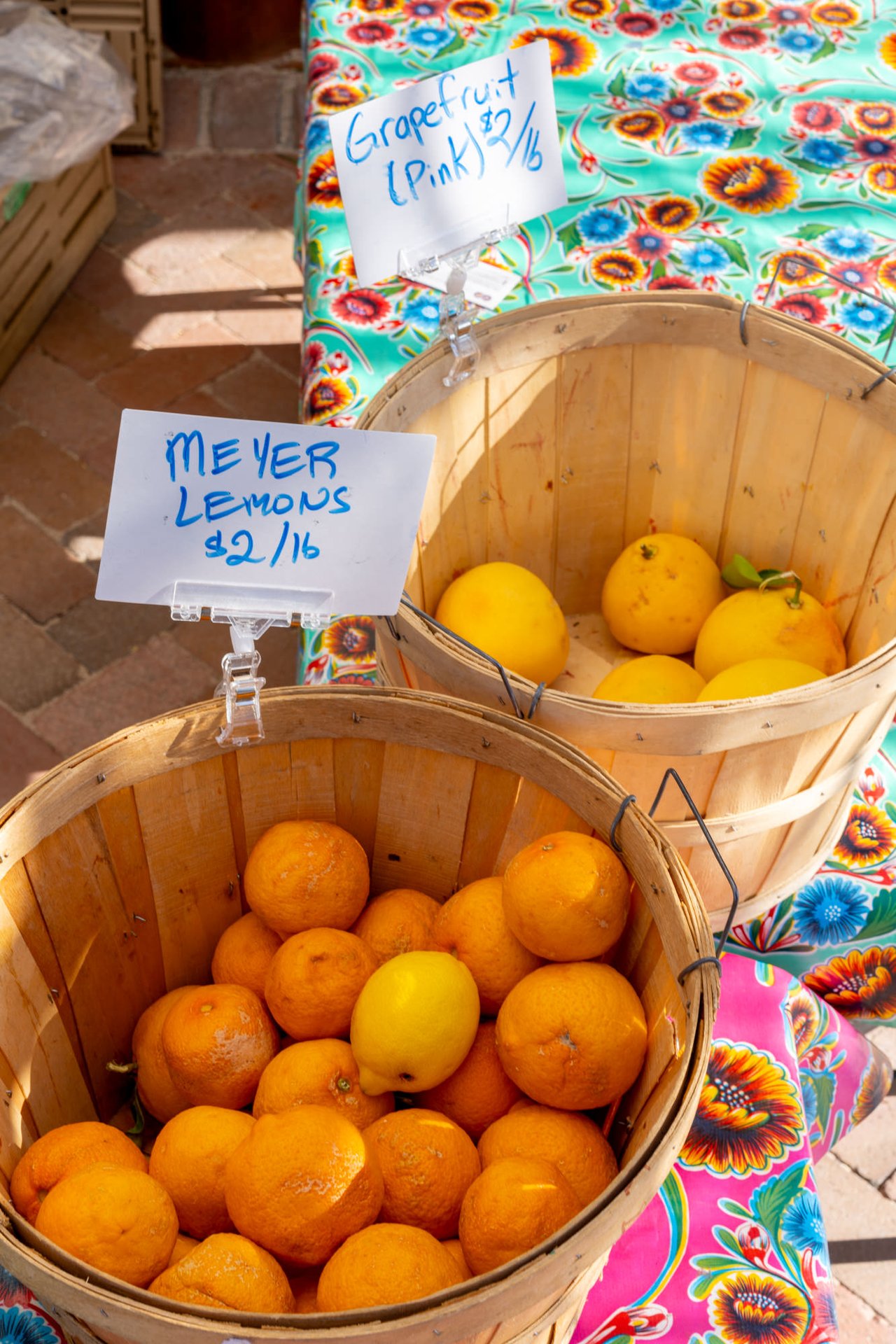
The Saturday farmers market at Steam Pump Ranch has become one of the town’s most recognizable rituals. It was launched as a community focal point and now draws roughly 700 customers each week.
That detail says a lot about how Oro Valley functions. It is the kind of place where recurring local habits, from market mornings to trail walks to recreation classes, help shape the experience of living there.
Errands and Dining Stay Close to Home
Oro Valley generally reads as a self-contained suburb rather than a place where you have to leave town for every basic need. Town materials point to retail hubs including Oro Valley Marketplace, Plaza Escondida, Rooney Ranch Plaza, and Safeway Center, along with local restaurants and cafés.
For many buyers, this matters as much as architecture or views. A neighborhood can feel more livable when daily errands, casual meals, and routine stops are built into the local pattern.
What Oro Valley Feels Like Overall
The clearest way to describe Oro Valley is suburban and outdoorsy at the same time. Its housing is mostly detached and residential, but its parks, pathways, mountain setting, and preserved desert features give it a lifestyle that feels more connected to the landscape than a typical suburb.
The tradeoff is usually not whether the town feels quiet or active. It is more about what kind of activity fits you best, whether that means golf amenities, neighborhood parks, paved paths, natural trails, or simply a home that opens toward desert views.
For design-conscious buyers and sellers, Oro Valley is especially interesting because setting and architecture work together here. Covered patios, courtyards, stucco walls, low-water planting, and mountain backdrops are not just visual details. They are part of how homes relate to the land and part of what gives the town its identity.
If you are thinking about buying or selling in Oro Valley, a design-aware local perspective can help you see beyond square footage alone. The right guidance can help you evaluate setting, layout, architectural character, and the details that shape long-term value. To start that conversation, connect with Hazelbaker & Ranek.
FAQs
What types of homes are most common in Oro Valley?
- Most housing units in Oro Valley are single-family detached homes, which make up 72.7% of the housing stock.
What does Oro Valley architecture usually look like?
- Many homes feature desert-adapted design elements such as stucco, stone, covered patios, courtyards, varied rooflines, and low-reflectivity colors.
Does Oro Valley feel more suburban or more outdoorsy?
- It feels like both, with a mainly suburban housing pattern and retail layout, plus strong access to trails, parks, shared-use paths, and mountain views.
Are there golf communities in Oro Valley?
- Yes, golf is a visible part of the local housing landscape, with courses and communities connected to golf access and golf views.
Where do people gather in Oro Valley for community events?
- Common gathering places include Steam Pump Ranch, the Saturday farmers market, the Community and Recreation Center, the library, and neighborhood parks.
What makes daily life in Oro Valley distinctive?
- Daily life often revolves around outdoor access, neighborhood amenities, recurring community events, and a calm residential pace with nearby shopping and dining.