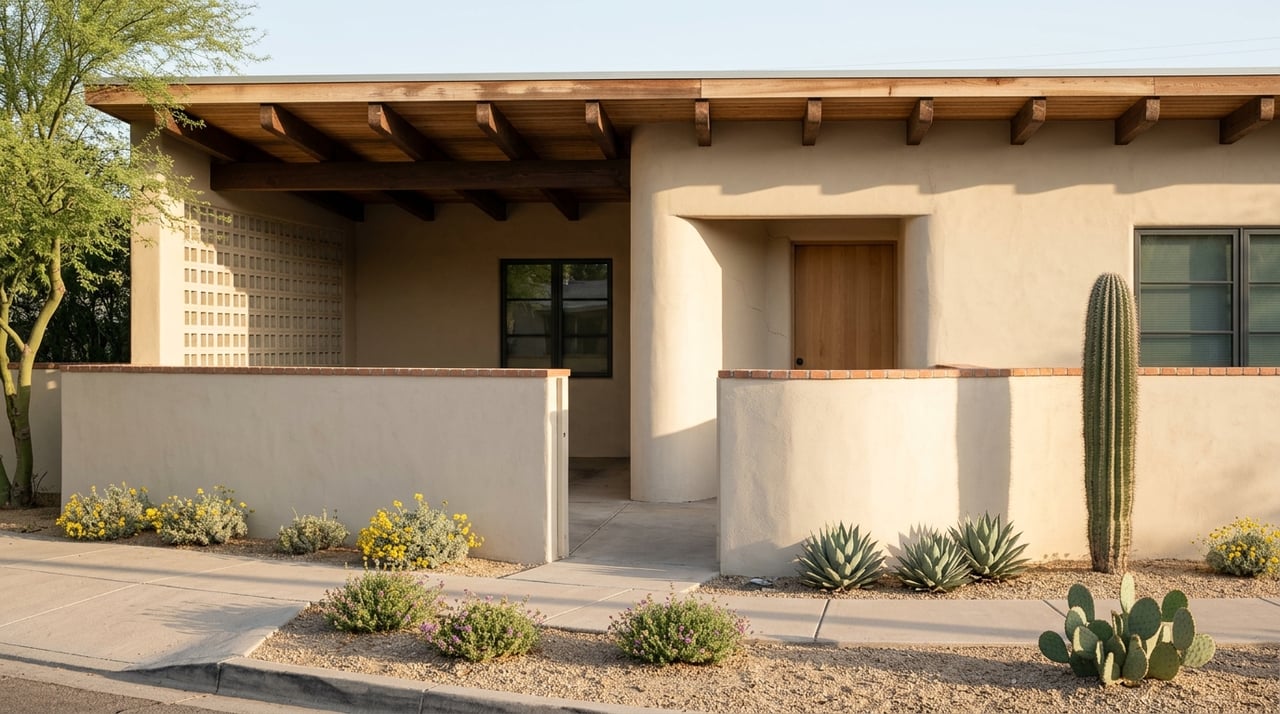
If you have ever driven through North Tucson and wondered why one street feels rooted in old Tucson while the next feels distinctly midcentury or quietly contemporary, you are noticing one of the area’s defining strengths. North Tucson is not one uniform district. It is a layered residential landscape where architecture, lot size, road pattern, and desert planting often shift from block to block. If you are buying or selling here, understanding those layers can help you make smarter decisions about value, upkeep, and neighborhood fit. Let’s dive in.
North Tucson works in layers
North Tucson is best understood as a group of overlapping submarkets rather than a single official district. City and county planning documents describe it through multiple plans and subareas, including the Northside Area Plan, the Catalina Foothills subregional area, and historic north-side neighborhoods like Fort Lowell, Richland Heights, and Campus Farm.
That matters because the experience of living here is shaped by more than a zip code. One pocket may offer large lots and dense desert vegetation, while another may have smaller postwar homes on a more traditional subdivision pattern. In practice, buyers are often choosing between different kinds of privacy, maintenance, and character.
The Northside Area Plan also notes that about 58% of the area is residential, with single-family detached housing as the dominant form, generally at about one to six units per acre. The area grew in waves through annexations from 1959 to 1982, which helps explain why the housing stock feels so varied.
Architecture tells the story
Early adobe and Territorial roots
Tucson’s earliest architectural vocabulary includes Sonoran adobe and American Territorial forms. The city’s historic-neighborhood guidance describes Sonoran buildings as one-story rowhouses built of exposed mud adobe, often with features like high ceilings, canales, vigas, and zaguanes.
In North Tucson, Fort Lowell offers one of the clearest connections to that earlier layer. City archaeology materials document adobe rowhouse remains and an American Territorial house foundation there. Preservation materials also emphasize that architecture, site, and landscape should be understood together, not as separate pieces.
For buyers, that means older homes in places like Fort Lowell can carry a stronger sense of historic fabric. For sellers, it means the setting and preservation context may be just as important as the structure itself when telling the story of a property.
Postwar ranch growth
Much of North Tucson’s visible residential character comes from the postwar period. After World War II, north-side neighborhoods filled in with low-density single-family subdivisions, and many of those homes still shape the area today.
Campus Farm reports that most of its homes date from just after the war, and that the neighborhood was gradually surrounded by single-story brick homes through the 1950s. Country Glenn traces its first house to 1949, followed by rapid expansion in the early 1950s.
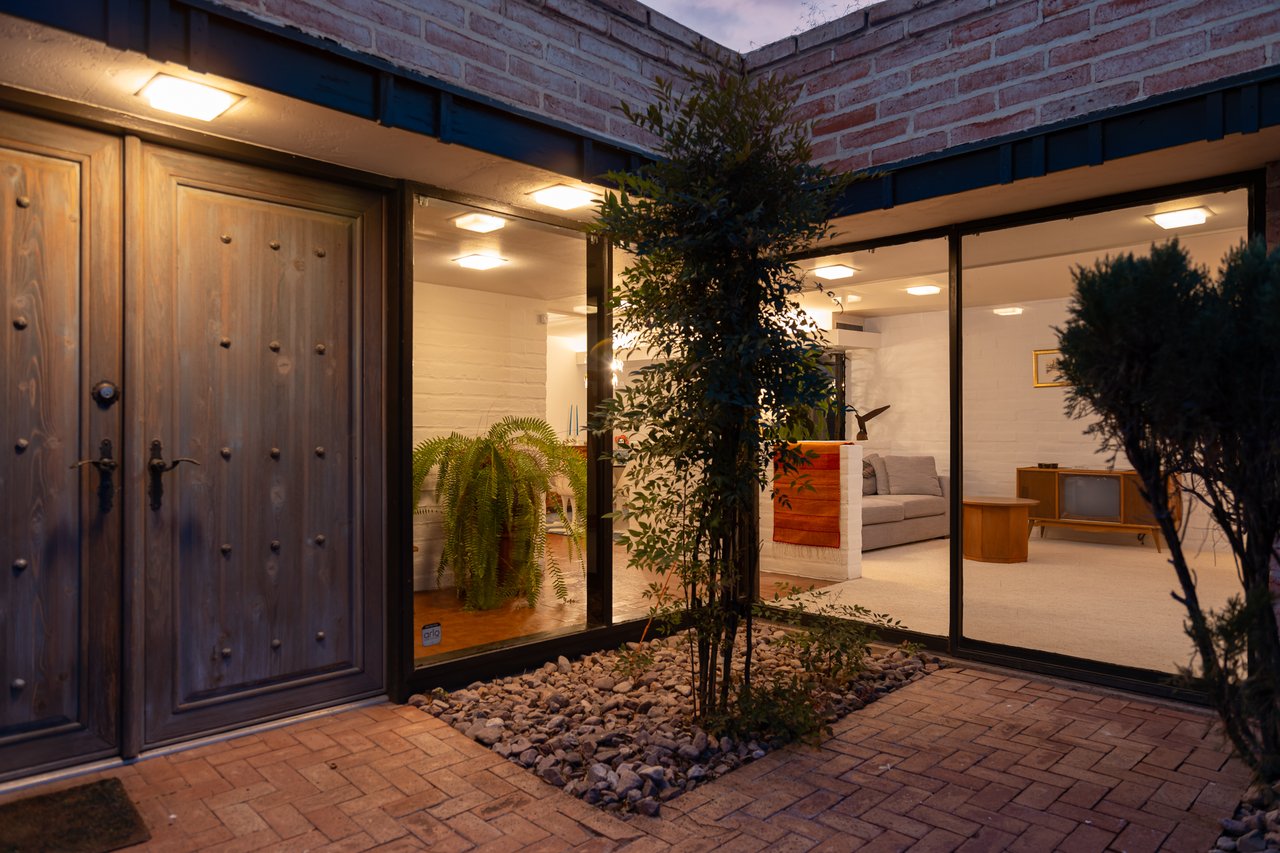
This is also the era when burnt adobe became a signature Tucson wall material. Documentation for San Rafael Estates explains that burnt adobe became dominant in the early 1950s and remained standard for many midcentury tract and custom homes into the late 1960s. If you are drawn to ranch homes, brick construction, or midcentury simplicity, this period is a major part of North Tucson’s appeal.
Contemporary infill and mixed-age streets
North Tucson is still evolving, but often through selective infill instead of wholesale replacement. That creates neighborhoods where homes from several decades sit side by side.
Coronado Heights is a strong example. The city notes that every decade since the 1940s is represented there, with homes and commercial spaces added as recently as 2018. That kind of mixed-age pattern can give an area visual variety, but it also means you need to look carefully at each property’s condition, design, and site strategy rather than relying on broad assumptions about the neighborhood.
Lot size changes the lifestyle
Architecture is only part of the picture. In North Tucson, lot geometry and topography often have just as much influence on daily life as the house itself.
Catalina Foothills Estates was laid out around views and natural topography, with lots averaging more than four acres. Most houses there were designed as variations on Spanish Colonial Revival forms, often centered on patios or pools, with low-pitched tiled roofs, stucco or burnt-adobe walls, sculpted wood, and ironwork.
That kind of setting offers a very different experience from a smaller-lot postwar subdivision. You may gain more separation between homes and stronger view orientation, but the site itself becomes a bigger part of ownership.
At the other end of the spectrum, Richland Heights West is known for large plots, dirt roads, gated cut-throughs, and dense desert flora between houses. Country Glenn reflects a more compact postwar subdivision pattern, yet still includes landscape features like a pocket park with rainwater basins for irrigation.
The takeaway is simple: in North Tucson, the lot is part of the architecture. Privacy, circulation, landscaping, and even maintenance expectations are closely tied to how the parcel was planned.
Desert landscape shapes neighborhood character
City planning documents repeatedly treat open space and buffering as part of neighborhood quality. The Catalina Foothills Subregional Plan promotes low-density development and cluster options that preserve open space. The Northside Area Plan also notes that cluster development can preserve native vegetation, washes, and historic or archaeological resources while buffers can help address sound, views, and traffic.
Those planning goals show up in the lived experience of many north-side neighborhoods. Native plants, open setbacks, and the arrangement of homes on the land often create a stronger sense of the Sonoran Desert than a more conventional suburban layout would.
For many buyers, that is exactly the point. The appeal is not only the house, but also the feeling of space, the texture of desert planting, and the relationship between built form and mountain views.
What buyers should look at closely
If you are shopping in North Tucson, style alone should not drive the decision. Two homes may both be labeled ranch, adobe, or custom, but offer very different tradeoffs once you look at the lot, the vegetation, the road pattern, and the age of the surrounding homes.
A helpful way to evaluate properties here is to look at four things together:
- Architectural character: Is the home’s style intact, altered, or updated?
- Site planning: How do the house, views, setbacks, and outdoor spaces work together?
- Landscape maintenance: What kind of irrigation, mulch, and stormwater care will the property need?
- Preservation context: Could historic review affect future exterior work or demolition?
For older homes especially, due diligence matters. Tucson’s Historic Preservation FAQ explains that Historic Preservation Zones require exterior design review, Neighborhood Preservation Zones require compatibility with surrounding historic buildings, and buildings older than 49 years can trigger demolition-review steps. That can be especially relevant in Fort Lowell and other older north-side pockets.
What sellers should understand
If you are selling in North Tucson, the market may reward a more thoughtful story than a basic feature list. Buyers looking here are often responding to a combination of architecture, materials, setting, and neighborhood context.
That means details like burnt adobe walls, a well-preserved patio layout, mature desert vegetation, or the way a house sits on a view lot may carry real weight. A property with architectural integrity or a strong site relationship may benefit from careful preparation, staging, and photography that highlight those qualities clearly.
It also helps to be realistic about maintenance conversations. Desert-oriented landscapes often reduce turf demand, but they are not maintenance-free. Tucson Water advises that water harvesting can capture storm runoff for landscape plants, and that residential owners should use mulch, water more deeply but less frequently, and inspect irrigation systems regularly.
For sellers, that creates an opportunity. If your home has a thoughtful desert landscape strategy, organized irrigation, or visible stormwater-conscious features, those elements can help buyers understand the property’s practical value.
Representative neighborhood patterns
Here is a quick snapshot of several north Tucson pockets and what they tend to illustrate architecturally:
| Neighborhood | Common pattern |
|---|---|
| Campus Farm | Postwar, semi-rural feeling with many 1950s single-story brick homes |
| Richland Heights West | Large lots, dirt roads, and abundant desert vegetation |
| Country Glenn | Postwar subdivision pattern beginning in 1949 with strong neighborhood identity |
| Coronado Heights | Mixed commercial and residential fabric with homes from the 1940s through 2018 |
| Fort Lowell | Historic enclave with adobe and Territorial-era remains and preservation review context |
| Catalina Foothills Estates | Large view lots and custom homes shaped by topography, patios, and desert-oriented planning |
These examples show why North Tucson is best read as a map of relationships, not just styles. Homes here are shaped by the land beneath them, the era they came from, and the way desert living was interpreted at the neighborhood scale.
Why architectural context matters
In North Tucson, you are rarely choosing between simply old and new. More often, you are choosing between different combinations of historical character, lot size, privacy, open space, and maintenance burden.
That is why architectural context matters so much. A home’s value here is often tied to how well it fits its site, how intact its design is, and how thoughtfully it relates to the desert landscape around it.
Whether you are buying a postwar ranch, preparing to sell a distinctive Foothills property, or trying to understand the tradeoffs between two very different north-side pockets, a design-aware approach can help you see beyond square footage. If you want guidance that looks closely at architecture, neighborhood context, and presentation strategy, connect with Hazelbaker & Ranek.
FAQs
What makes North Tucson neighborhoods architecturally different from each other?
- North Tucson includes overlapping submarkets shaped by different growth periods, lot patterns, and landscape strategies, so architecture can change noticeably from one pocket to the next.
What architectural styles appear in North Tucson?
- North Tucson includes early adobe and Territorial influences, postwar ranch and brick homes, burnt-adobe midcentury housing, and newer infill in mixed-age neighborhoods.
What should buyers check when considering an older North Tucson home?
- Buyers should review the home’s design integrity, site layout, landscape upkeep, and whether preservation review or demolition-review rules may apply.
What is distinctive about Catalina Foothills Estates in North Tucson?
- Catalina Foothills Estates is known for large view-oriented lots, homes shaped by topography, and Spanish Colonial Revival variations with patios, pools, and desert-sensitive site planning.
Does desert landscaping in North Tucson mean less maintenance?
- Desert landscaping can reduce turf demand, but it still requires upkeep such as mulch, irrigation checks, and deep, less frequent watering.
Why does lot size matter so much in North Tucson neighborhoods?
- Lot size affects privacy, views, landscaping, circulation, and maintenance, which makes it a major part of the ownership experience in North Tucson.